Teepees, Covered Wagons and Tiny Homes: Utah State Park Lodging
A campsite can be the right base for a trip, but sleeping in a tent is not everyone’s idea of a good night. Utah State Parks also has distinctive overnight options, including traditional structures, furnished stays and small modern homes. The key is to choose by the experience you want, then check the official listing carefully: a memorable name does not tell you what is inside, what you need to bring or what the stay costs.
Utah State Park lodging goes beyond tents and cabins
A tent site gives you a place to camp, but you bring the shelter and most of the setup. A cabin, yurt or other roofed stay changes that equation. It may save you from pitching a tent, offer a different sense of place, or let you spend more of the trip outdoors rather than organizing camp. But the exact setup depends on the individual listing, so the structure’s name is only a starting point.
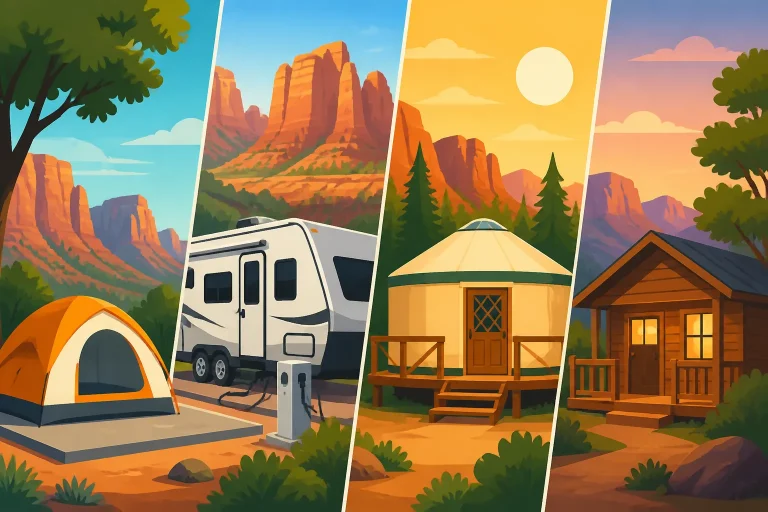
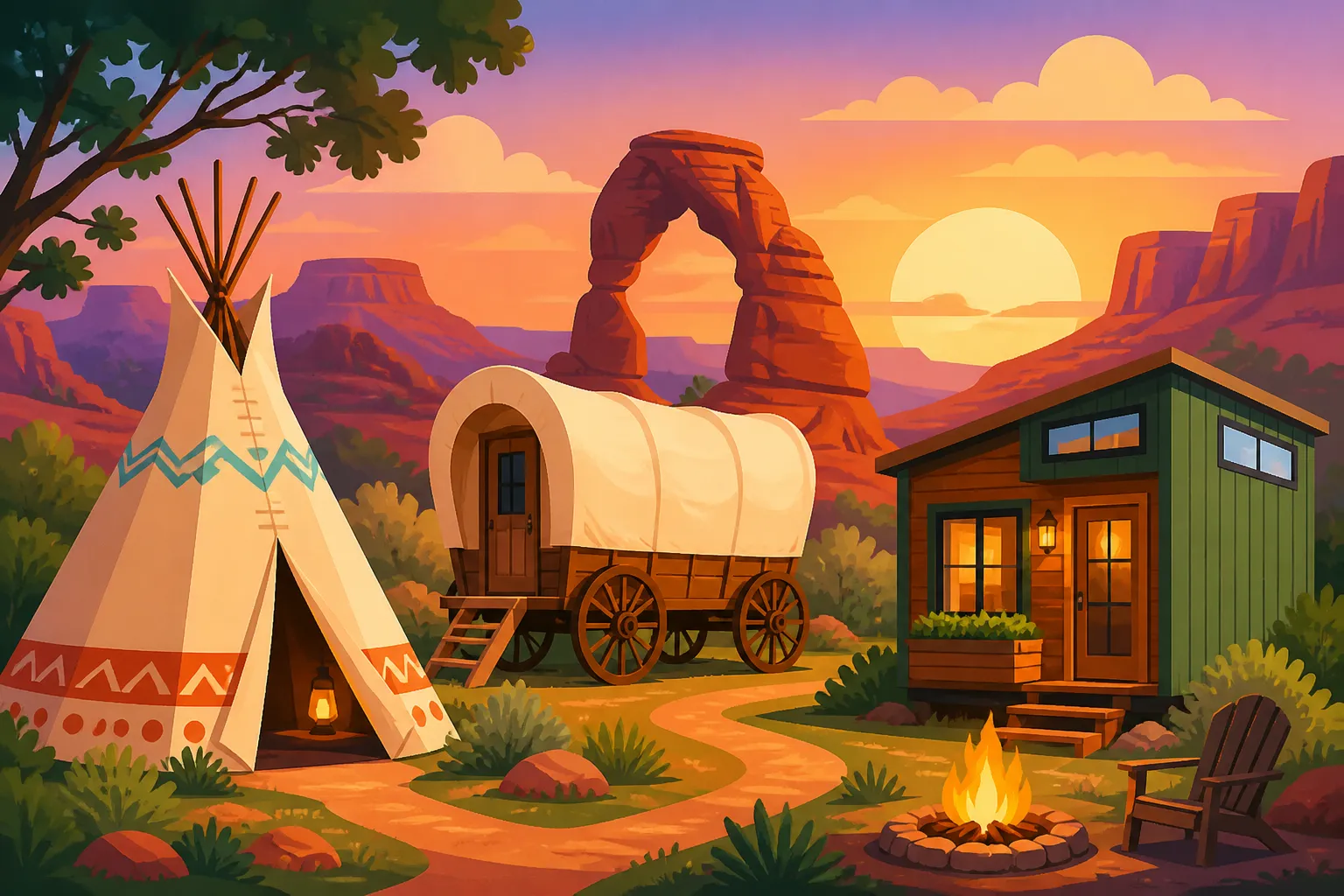
Utah’s State Park lodging includes options with very different character. According to the Utah Division of State Parks and Recreation, Fremont Indian offers overnight lodging in a traditional canvas teepee, an authentic pit house or a rustic cabin. East Canyon offers overnight stays in covered wagons and secluded, fully furnished yurts. Echo State Park offers modern, lakeside tiny homes. Dead Horse Point offers luxury yurts.
Those descriptions can help you picture the kind of stay, but they do not answer the practical questions that determine whether a place suits your group. “Fully furnished” does not tell you which furnishings are provided or what supplies are excluded. “Tiny home” does not, by itself, tell you the sleeping arrangement, kitchen setup or bathroom arrangement. “Luxury” is not a substitute for reading the amenities list. And a traditional structure may be appealing without necessarily offering the same conveniences as a conventional cabin.
Treat every stay as its own accommodation rather than assuming that a particular type comes with a standard package. Before choosing, check the specific listing for sleeping capacity, included equipment, utilities, restrooms, bedding, heating or cooling, and any restrictions that affect your plans. If the details are not clear, ask the park using contact details on its official website.
It can also help to separate two questions that are easy to combine: “Would we enjoy this kind of place?” and “Can we make this place work for our needs?” A teepee, wagon or yurt may make the trip feel special; the listing’s details tell you whether the practical side fits. That distinction is useful for every traveler, but especially for families, guests who need particular accessibility features, and anyone arriving without camping gear.
If you are deciding between a roofed stay and a campsite, compare what you would bring and what you would still need to arrange. Camping in Utah State Parks: Tent Pads, Hookups, Yurts and Cabins gives a wider view of the different ways to stay overnight, while Glamping at Utah State Parks: Casitas, Cottages and Canvas Yurts helps put more distinctive roofed accommodations in context.
Compare the experience, not just the structure’s name
A lodging name can set expectations before you see the details. A wagon sounds different from a cabin, and a tiny home sounds different from a yurt. But the name tells you more about the style than about the day-to-day experience. For a useful comparison, look at what the space offers, what you must bring, and how it fits the trip.
| What you are comparing | Why it matters | What to check in the official listing |
|---|---|---|
| Sleeping setup | A group may need separate beds, a particular arrangement or enough room for children to settle comfortably. | Sleeping surfaces, capacity, room layout and any limits on who may stay |
| Furnishings | “Furnished” can mean different things from one accommodation to another. | Which furniture, cooking items and basic equipment are included |
| Bedding and towels | You may need to pack linens even when the stay has a roof and beds. | What is supplied and what guests need to bring |
| Bathroom access | An indoor bathroom and a nearby shared restroom are very different arrangements. | Whether a bathroom is inside, shared or elsewhere, and what facilities are available |
| Cooking | A kitchenette, grill or lack of cooking equipment affects meals and packing. | Appliances, utensils, food-preparation space and any cooking restrictions |
| Temperature control | Comfort can depend on the season, location and equipment provided. | Heating, air conditioning, ventilation and any seasonal limitations |
| Location | A lakefront or rim setting can shape the whole trip, but may also affect access and exposure. | Distance to parking, restrooms, activities and other facilities |
| Accessibility | A structure’s design and route to it may affect whether it works for a guest. | Surface, steps, doorway access, interior layout and available accessibility information |
| Cost and terms | The overnight rate may not tell the whole story of what the reservation requires. | Current charges, included park entry if stated, taxes or other charges, and cancellation terms |
The table is a way to organize questions, not a promise that a certain feature exists. If the listing does not spell out a detail, do not infer it from the lodging type. For example, a yurt can be furnished or minimally equipped, and a cabin can have a very different bathroom or kitchen setup from another cabin. The names are not universal specifications.
It is also worth asking what the property means by “capacity.” A listed maximum might count all guests, only overnight guests or guests of a particular age; the listing should explain the applicable rule. Do not assume you can add a child, visitor or extra sleeping arrangement without checking. If traveling with a larger party, compare the lodging’s stated capacity with the group’s needs before you reserve.
The same careful approach applies to included park access. Some stays may have entry arrangements explained in the listing, while others may require you to understand admission separately. Check what the specific reservation includes rather than assuming a lodging reservation always covers every vehicle or visitor. Yurts, Casitas and Cottages That Include Your Park Entry and Is Park Admission Included When You Camp at a Utah State Park? address the distinction between lodging and park access.
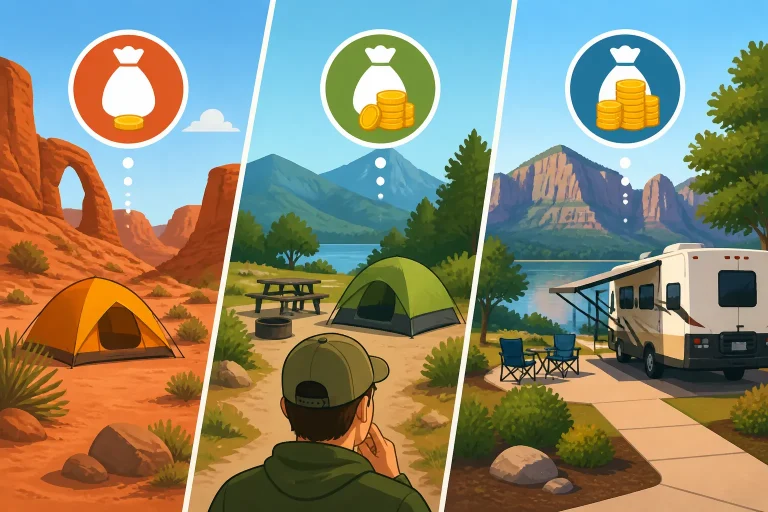
If costs are part of the decision, focus on the total trip rather than the headline nightly rate. Work out which charges apply to your stay, what supplies you need to bring or rent if offered, and whether your travel plans include other expenses such as meals or equipment. For current figures and terms, use the official listing or reservation system; do not rely on an old screenshot or a general estimate from another property.
Choose lodging around the way your group travels
The best option is not necessarily the most unusual one. It is the stay that matches your group’s priorities, comfort needs and plans for the day. Start by asking what matters most: a distinctive setting, a furnished interior, room for a particular group, easy meal preparation, or simply a roof and a place to sleep.
If the accommodation itself is part of the trip
A teepee, pit house or covered wagon can be a central part of the experience rather than just somewhere to sleep. These choices may appeal to travelers who want something that feels different from a standard room. Consider whether everyone in your group is comfortable with an unfamiliar layout and whether the listing’s facilities suit your routines.
A distinctive structure does not automatically mean a more rugged stay, nor does it guarantee hotel-style convenience. Check the actual furnishings and facilities. Ask whether you need to bring bedding, cooking supplies or other essentials, and whether bathrooms are inside the accommodation or elsewhere. A stay that looks simple in a photograph may have requirements that affect packing and comfort.
If you want a furnished stay
A furnished yurt can reduce the amount of camp setup, but the word “furnished” still leaves important questions unanswered. Find out what furnishings are included, whether the stay has a cooking area, and what guests need to supply themselves. To compare yurt layouts and typical questions, see Is a Yurt Just a Canvas Cabin? Comparing Utah State Park Lodging and Yurt Rentals at Utah State Parks: Heat, Bunks and Who Can Stay.
Also distinguish between a structure that is furnished and one that is fully equipped for every part of your trip. The listing may provide beds or furniture but not bedding, towels, kitchenware or personal supplies. Check the actual list before packing. What Bedding Isn’t Provided in a Utah State Park Cabin or Yurt? can help you prepare for that part of the stay.
If convenience matters more than novelty
A small home or cabin-style space may appeal to travelers who want a more conventional indoor setup. But do not assume that a small home has every feature you associate with a house. Its size, layout, appliances and bathroom arrangements may differ from what you use at home. Read the listing for specific details and ask about anything that affects your group’s comfort.
Think about the daily rhythm of the trip. Will you cook most meals? Need a quiet place for a child to nap? Expect to spend most of the day away from the accommodation? Need a particular sleeping arrangement? These questions can be more useful than choosing by category alone. They point you toward the details worth confirming.
If your group has accessibility needs
The word “cabin,” “yurt” or “tiny home” does not establish whether a particular stay is accessible. Look for information about the route from parking, the surface and slope, steps or thresholds, doorways, interior circulation and restroom access. If a detail is not listed, contact the park through its official website and describe the specific need. General labels are not enough to determine whether a space will work.
Traveling with a dog or other pet requires a separate check, too. Do not assume that lodging rules match campground rules or that every roofed accommodation accepts pets. Review the park’s current policy for that exact stay. Where Pets Are Barred in Utah State Park Cabins, Yurts and Cottages and Dog Fees and Limits for Utah State Park Yurts and Cabins are useful starting points for understanding which questions to ask.
Read the listing before you reserve
The official lodging listing is where the broad idea becomes a real trip plan. Read it closely, including the description, amenity list, policies and reservation terms. If a detail is missing, treat it as unknown rather than filling in the gap from a photo, a review or what another park provides.
Start with the basics: the lodging’s location, the number of guests it can accommodate, sleeping arrangements and what is included. Check how the listing describes the beds or sleeping surfaces. If your party has a specific sleeping requirement, confirm that the arrangement meets it rather than relying only on the maximum occupancy.
Next, check the facilities that change what you pack. Is there a bathroom in the unit, or is restroom access elsewhere? Is there a refrigerator, cooking equipment or a place to prepare food? Are linens, towels or cleaning supplies provided? Does the listing specify heating or cooling? If you cannot find an answer, ask before making plans around it. Fridges, Grills and Kitchenettes in Utah State Park Cabins and Yurts and Air Conditioning in Utah State Park Lodging: Which Stays Have It can help you identify the questions to settle.
Look for any limits or requirements that affect your party. The listing may specify which guests can stay, the maximum occupancy, rules for pets, vehicle information, or whether visitors are permitted. Do not infer that a family member or extra guest can be added just because there appears to be room. Policies can differ by accommodation, so use the details for the exact unit you are considering.
Then check arrival and departure information, what to do if you expect to arrive late, and what the reservation says about changes or cancellations. Do not assume that policies are identical across Utah State Parks. If weather, travel distance or a tight itinerary could affect your arrival, understand the terms before you commit.
Confirm how park entry works for the reservation and whether any other charges apply. The listing or official reservation system is the place to check current costs and conditions. Cabins, Yurts and Campsites at Utah State Parks: How to Get One explains the general process, and Booking Lead Times for Yurts, Cottages and Casitas in Utah is relevant if you are planning around availability.
Finally, check whether the listing’s photos show the exact accommodation or represent the lodging category generally. Photos can help you understand the setting and style, but they may not reveal every feature, limitation or change in layout. Use the written description for the terms and ask about any detail that could make or break the stay.
Plan packing and meals around what is actually provided
The easiest way to overpack—or arrive without something important—is to treat a roofed stay as if it were a standard hotel room. A state park accommodation may provide some furnishings without supplying the items you expect. Build your packing list from the listing, not from the structure’s name.
Begin with sleep. Confirm whether bedding is supplied, what type of sleeping surfaces are present and whether your group needs extra blankets or pillows. Check whether towels are provided if you expect to shower during the trip. If the listing is unclear, ask directly. Bringing the items you need is usually easier than discovering the gap after arrival.
Plan food after checking the cooking setup. A description of the accommodation may not say whether you can cook indoors, what equipment is provided or whether there is a refrigerator. If you expect to prepare meals, confirm the appliances and utensils rather than assuming they are present. If cooking options are limited, plan simple meals that fit the facilities and pack food safely.
For any stay, separate “food for the trip” from “food storage.” Find out what storage is available, and follow the park’s current instructions for food and trash. Do not leave food or scented items where the park rules do not allow them. If you are bringing a cooler, ask where it can be stored and how to manage waste at the accommodation.
Clothing and personal supplies depend on the forecast and the location, not just on whether the building is enclosed. Check expected conditions, and ask whether the unit has heating or cooling if temperature control is important. A roof does not guarantee that the interior will stay at a preferred temperature in every season. Winter Closures, Spring Crowds, Summer Heat: A Utah State Parks Year and Overnight Temperature Swings at Utah’s Desert State Parks offer broader planning context for changing conditions.
Bring practical items for spending time outside the unit, too. Think about the activities you have planned, the distance between the accommodation and shared facilities, and how you will carry essentials during the day. If you intend to walk, paddle, picnic or spend time near water, pack for those plans separately from the overnight setup. Lodging is the base for the trip; it does not automatically provide activity equipment.
Before departure, make a compact checklist from confirmed details:
- Sleeping items the listing says are not supplied
- Personal toiletries and towels, if needed
- Food and any cooking equipment you are responsible for bringing
- Clothing suited to the forecast and outdoor activities
- Any accessibility or personal-care items your group relies on
- A copy of the reservation details and the park’s arrival instructions
This checklist should be adjusted to the exact accommodation. A traveler staying in a furnished unit may need less camp gear than someone using a tent site, but that does not mean no preparation is needed. The purpose of checking ahead is not to bring everything; it is to avoid relying on assumptions.
Plan availability, cost and the rest of the trip
Distinctive lodging can be appealing to many kinds of travelers, so treat availability as something to verify rather than a given. Search the official reservation system for the dates you want and review the rules attached to the specific accommodation. If your dates are flexible, it may help to compare nearby options or different lodging categories, but keep the park location and your group’s needs in view.
Do not assume that all types of lodging at a park use the same availability pattern or booking terms. Check the dates shown in the system, the reservation window and any restrictions that apply to your stay. If you are planning a trip around a special occasion or a fixed travel route, confirm the accommodation before building the rest of the itinerary around it.
Cost also needs a property-specific check. The current amount can depend on the accommodation and the reservation details, so compare the official listing rather than carrying over a figure from another park or an earlier trip. Look for what the reservation includes and whether separate park admission or other charges apply. For a wider discussion of campsite and lodging costs, see Why Campsite Prices Vary So Much Across Utah State Parks; use the official listing for current lodging figures and conditions.
Think through the route to the park and the time you expect to arrive. Confirm directions and arrival instructions using the park’s official information. If the trip includes a long drive or late arrival, understand the check-in procedure and what to do if plans change. Do not assume that the accommodation will be ready for an early arrival or that a late arrival works without following the stated procedure.
Keep a backup plan if the lodging you want is unavailable. Options might include another accommodation type at the same park, a nearby campground or adjusting the trip dates. Each alternative has different requirements: a campsite means bringing camping equipment, while another roofed option may have different facilities or policies. Compare alternatives on the basis of what your group can actually use, not just what appears available.
If you are combining parks, avoid planning a tightly packed route that leaves no room for a change. Check distances, driving conditions and the operating details for each park before relying on a transfer day. Linking Several Utah State Parks Into One Long Weekend can help with the broader itinerary. For camping details at particular destinations, use the relevant park-specific pages, such as Dead Horse Point State Park Camping: Kayenta, Wingate and the Yurts or Lake Cottages and Tiny Homes at Echo State Park.
When plans depend on a specific feature—such as a bathroom inside the unit, an accessible route, a cooking appliance or a pet policy—confirm it before reserving. If the official description leaves room for interpretation, contact the park using its official website. A brief question before booking is more useful than discovering that an assumption was wrong after you arrive.
Make the stay comfortable without expecting it to be something else
A distinctive roofed stay can make a trip memorable, but it is most enjoyable when expectations match the actual space. A teepee, wagon, yurt or tiny home is not automatically equivalent to a hotel room, a fully equipped house or a campsite. It may offer a different balance of shelter, furnishings, convenience and connection to the setting. Decide which trade-offs your group is happy to make.
If convenience is the priority, look for clear information about beds, bathrooms, cooking and temperature control. If the main draw is the structure or setting, decide which comforts are essential and which are optional. If the trip is for a family or a group with varied needs, make sure everyone understands what the accommodation does and does not include.
Think about how much time you will spend at the unit. Travelers who expect to be outside for most of the day may need a simpler sleeping arrangement, while a group planning to relax indoors may care more about seating, cooking space and temperature control. Neither approach is inherently better; the important thing is to match the accommodation to the way you plan to use it.
Take care not to let appealing photos set expectations beyond the listing. A scenic location may be a strong reason to choose a stay, but it does not guarantee privacy, shade, a particular view from inside, or a specific level of quiet. If those details matter, look for them in the official description or ask the park. Also review nearby facilities and the route between them, particularly if someone in your party has mobility needs or prefers not to walk far.
Before the trip, share the practical details with everyone coming along. Explain what they should pack, what kind of sleeping arrangement to expect and any rules that apply to the accommodation. This is especially helpful for children or guests who have never stayed in a nonstandard structure. A small amount of preparation can prevent frustration when the space is different from what someone imagined.
Once you arrive, follow the park’s instructions for using the accommodation and caring for the space. Treat the furnishings and facilities as described, respect posted rules and leave the unit as required by the listing. If something essential is missing or does not match the reservation, use the park’s official contact information to ask for help rather than improvising around a safety or access issue.
The goal is not to find the most elaborate lodging. It is to choose a stay that supports the trip you want: a distinctive overnight, a convenient base, a family outing or a quieter break outdoors. Read the listing closely, confirm the details that matter and pack for the actual setup. That approach works whether you choose a traditional structure, a furnished stay or a small modern home.
Frequently Asked Questions
Do all Utah State Park yurts have the same furnishings?
No. Furnishings and facilities can differ by park and specific unit. Check the official listing for the exact accommodation and ask the park about anything that is not described.
Does a tiny home or covered wagon include a bathroom?
The lodging category alone does not establish the bathroom setup. Read the listing to see whether facilities are inside the unit or elsewhere, and confirm if the information is unclear.
Should I bring bedding to a roofed state park stay?
Check the accommodation’s listing before packing. Some details may differ between units, so do not assume bedding is provided because the stay has beds or is described as furnished.
Is park admission included with an overnight lodging reservation?
Check the reservation details for the specific stay. Do not assume admission is included or that the same arrangement applies to every lodging option.
Sources
- Utah Division of State Parks and Recreation — Adventure on Land | Utah State Parks (checked November 22, 2026)
Disclaimer
This article is for general informational purposes only and does not constitute professional advice. Laws, prices and regulations vary by location and change over time. Consult a qualified professional for guidance on your specific situation. Utah Camping & RV is not a government agency and is not affiliated with any government agency.