Dogs in Utah State Parks: Leashes, Cleanup and Off-Limits Spots
Taking a dog to a Utah state park can make a trip better, but a leash rule alone doesn’t answer where your dog may go or what to do at camp. The safest plan is to check access for each place you intend to visit, keep your dog leashed, and prepare for waste cleanup and unattended-pet requirements.
Start With the Park, Not an Assumption
A dog-friendly campground does not automatically mean every trail, beach, building, or lodging area is dog-friendly. Treat access as something to confirm for each part of your trip. Before you leave, check the park’s official information for pet rules and restrictions, and ask the park about any detail that is unclear.
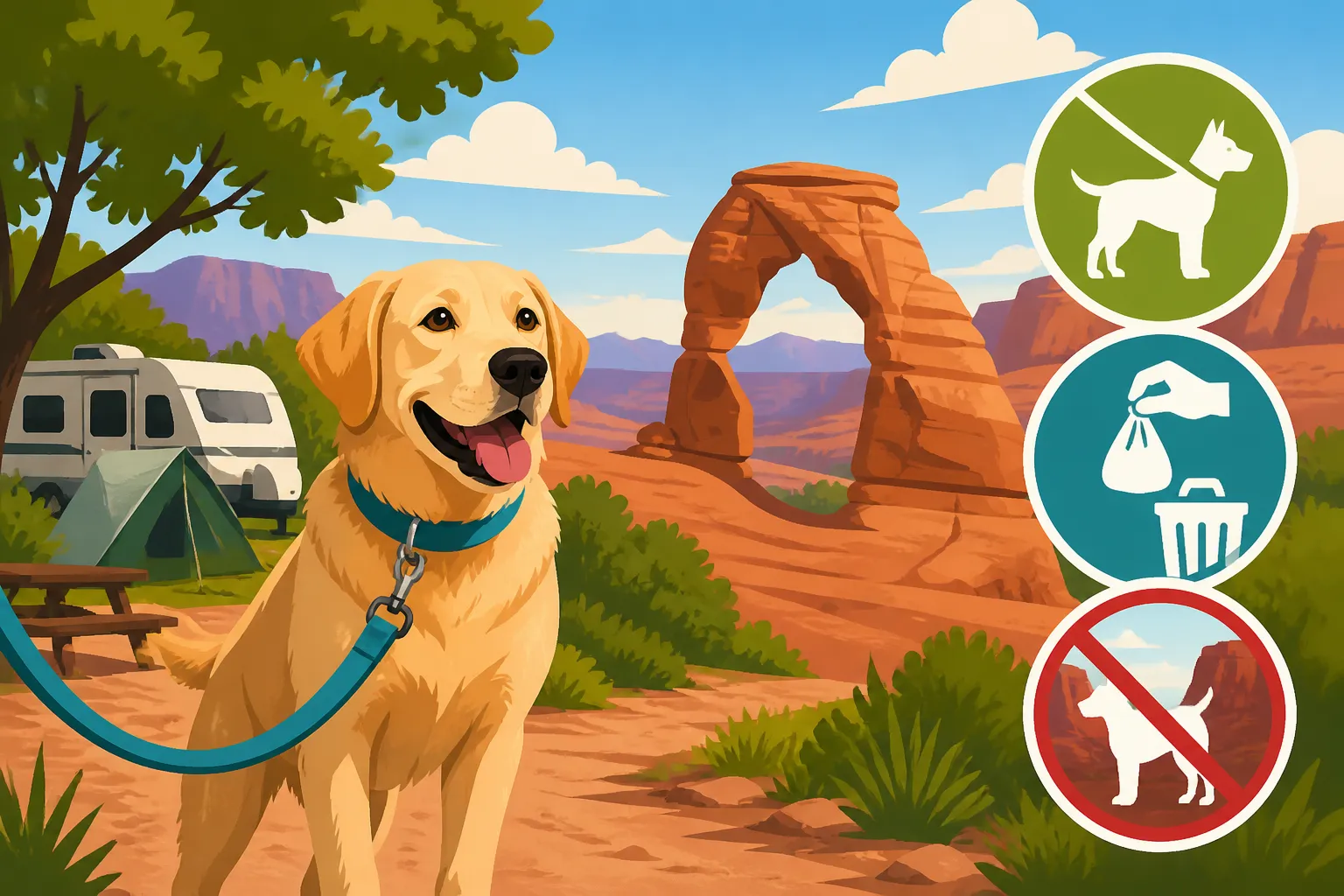
According to the Utah Division of State Parks and Recreation, pets must be leashed at all times, even while in the campground. That gives you a basic rule to plan around, but it does not tell you whether a particular trail or facility allows dogs. Check the specific places you want to visit rather than relying on a general impression that a park welcomes pets.
A useful way to plan is to divide the trip into separate areas:
| Part of the visit | What to verify before you go |
|---|---|
| Campground | Whether pets are permitted in the campground and what leash or control rules apply |
| Trails and viewpoints | Whether dogs may enter, and whether any sections have different restrictions |
| Beaches and swimming areas | Whether dogs may be in that area and what access boundaries apply |
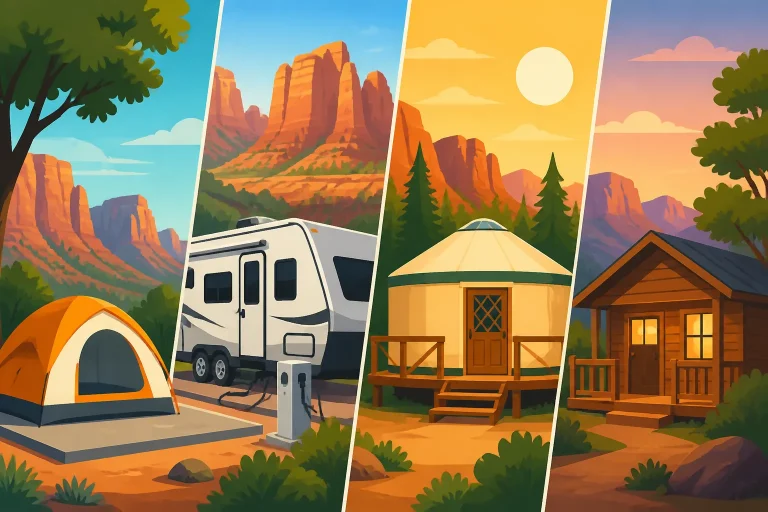
| Cabins, yurts, cottages, or other lodging | Whether pets are permitted in the specific accommodation |
| Visitor buildings and other facilities | Whether dogs may enter or must remain outside |
| Day-use areas | Whether the rules differ from the campground or other areas |
This is not a list of Utah-wide permissions. It is a checklist of questions to settle with the park. If the official information does not clearly answer one of them, contact the park before you build your itinerary around bringing your dog there.
You can use Before You Bring a Dog: Checking a Utah State Park’s Pet Rules to organize that check, and Which Utah State Parks Welcome Dogs at the Campground? for a campground-focused starting point. Neither a campground listing nor a dog-friendly label should replace checking the rules for the exact area you plan to use.
It also helps to separate three different questions: Is the dog allowed at the park? Is the dog allowed in the campground or lodging? Is the dog allowed at the activity or facility you have in mind? Getting a yes to one question does not settle the others. A quick review before departure can prevent a frustrating arrival, especially when the dog is part of the whole group’s plan.
Leashes, Control, and Moving Around the Park
A leash is both a rule and a practical tool. It helps you keep your dog close when people, wildlife, bikes, vehicles, or other dogs are nearby. Even a calm dog can react to a new sound or scent, and a dog that is friendly with familiar people may be uncomfortable with a stranger approaching.
Choose a leash and harness or collar that fit your dog securely and are comfortable to use for the outing you have planned. Check the hardware before leaving home. If your dog pulls, lunges, or gets overexcited around other animals, consider practicing calm walking and passing at home before attempting a busy campground loop or trailhead.
The Utah Division of State Parks and Recreation also describes pets as must be Leashed: (oft max) and under control. Because the wording includes an incomplete leash-length detail, do not infer a specific maximum from it; check the park’s current official information if leash length is not clear.
In a shared space, give other visitors room. Keep the leash short enough to prevent your dog from crossing into someone else’s path, campsite, or picnic area. Move aside when people need to pass, and avoid letting the leash stretch across a walkway. These habits make it easier for visitors who are nervous around dogs and reduce the chance of tangles or sudden encounters.
Pay attention to your dog rather than assuming that a familiar routine will work in a new setting. Campground noises, unfamiliar animals, changing light, and new surfaces can affect a dog’s behavior. Watch for signs that your dog needs a break, such as persistent pulling, barking, panting, or difficulty settling. If your dog is stressed, choose a quieter place or return to camp instead of trying to push through an activity.
Remember that control includes more than holding a leash. A dog may be leashed and still disturb neighbors by barking for a long time, crowding another visitor, or repeatedly reaching into another campsite. Keep your dog close enough that you can respond promptly. If an encounter feels tense, increase the distance rather than assuming the animals will work it out.
For a trail outing, check whether dogs are permitted on that route and plan a walk that suits your dog’s fitness and temperament. Do not leave a dog tied outside a building or facility unless the park’s rules and the situation make it appropriate. If your dog cannot accompany you to a planned stop, arrange a safe alternative rather than treating the leash as a substitute for supervision.
For more trail-specific questions, see Can Dogs Go on the Trails at Utah State Parks?. For campground behavior and close quarters, Keeping Your Dog Calm at a Busy Utah State Park Campground can help you think through the practical side of sharing the space.
Finding Off-Limits Spots Before You Arrive
The most useful answer to “Where can my dog go?” is the answer for the specific park area, not a guess based on what was allowed somewhere else. A dog may be welcome at a campsite while access to a trail, beach, building, or lodging unit has separate conditions. Confirm those boundaries before setting your route.
Start with the official park information. Look for pet rules attached to the campground, trail, beach, or accommodation you plan to use. If the wording is general, ask a direct question: may a dog enter this specific area, and are there any conditions or exclusions? When you get an answer, make a note of the area it applies to so it does not get confused with a different part of the park.
At the park, follow posted signs and instructions. A sign at a particular entrance or facility may explain a local boundary that is not obvious from a map. If signs and information you reviewed earlier appear to conflict, do not assume the more permissive interpretation; check with park staff before proceeding.
Do not treat a dog’s ability to walk through an area as proof that the dog is permitted there. Some restrictions are easy to miss when approaching from a campsite or connecting path. Plan a route that avoids areas where pet access is uncertain, and have a backup walk or activity in mind.
For beaches and swimming areas, check access separately from general park or campground access. A dog being present elsewhere in the park does not answer whether it may be in the water, on the sand, or within a particular facility boundary. For cabins, yurts, and cottages, verify the rule for the exact accommodation rather than relying on a park-wide pet description. Where Pets Are Barred in Utah State Park Cabins, Yurts and Cottages and Dog Fees and Limits for Utah State Park Yurts and Cabins address lodging questions that are distinct from campsite access.
Use this simple process when a rule is unclear:
- Identify the exact place you want to visit, such as a named trail, beach, or lodging unit.
- Check that place’s official park information for pet access and conditions.
- If the answer is not clear, contact the park through its official website before traveling.
- Recheck posted signs when you arrive.
- If access is restricted or uncertain, use your backup plan rather than testing the boundary.
This approach is especially useful for trips that combine camping with several activities. It keeps one access decision from being mistaken for permission everywhere else and gives you a workable plan if your dog cannot accompany you to a particular stop.
Camping With a Dog: Neighbors, Noise, and Supervision
A campsite is a shared space, not a private yard. Dogs may notice every passing person, wildlife scent, or unfamiliar sound, so prepare for the conditions of a busy campground. Keep your dog leashed and close, and avoid allowing it to enter a neighboring site, approach another camper, or investigate food and gear that do not belong to you.
Set up your dog’s resting area within your own campsite and in a place where you can keep an eye on it. Bring familiar bedding or another settling aid if that helps your dog relax, but do not assume that a dog can be left outside unattended just because it is contained by a leash, tie-out, or portable enclosure. Check the park’s instructions for unattended pets and make arrangements that meet them.
At Palisade State Park, the Utah Division of State Parks and Recreation says visitors with pets must clean up after them and crate them if they are ever left unattended. If you are staying there, plan for an appropriate crate and think through whether your dog is comfortable using it before the trip. If you are visiting a different park, verify that park’s unattended-pet requirements rather than assuming the Palisade rule describes every location.
An unattended dog can bark, become distressed, or react to people and animals passing by. It may also be harder for you to notice if the dog is uncomfortable or in need of attention. If your plans include a place where your dog cannot go, decide in advance who will stay with it or whether that activity should be changed. Do not make the decision only after you reach the entrance.
Quiet, predictable routines can help a dog settle. Give it time to become familiar with the campsite, keep its water and resting area accessible, and avoid inviting every passerby to interact. If your dog begins barking repeatedly, take it for a leashed break away from neighboring sites or adjust the setup. A short interruption can be more considerate than waiting for the disturbance to continue.
When people approach, ask before allowing contact. Not every visitor wants to meet a dog, and some dogs are uneasy when strangers reach toward them. Keep the leash in hand and give your dog space. If another dog is approaching, do not assume both animals want to greet each other; move aside and create distance if either dog seems tense.
For more on the specific Palisade requirements, read Dogs at Palisade State Park: Cleanup and Crating Rules. For the general question of leaving a dog while you are away from camp, see Leaving a Dog Unattended at a Utah Campsite. Use those topics as prompts for checking the current rules, not as a reason to skip the park’s own instructions.
Waste Cleanup and Keeping the Campsite Tidy
Pet waste is part of trip planning. Bring bags before leaving home, keep them somewhere easy to reach, and have a plan for disposing of them in the appropriate place. It is easy to forget a bag when you are walking away from the campsite, so keep a supply with the leash or in a small day bag.
The Utah Division of State Parks and Recreation advises visitors to bring waste bags for pets and dispose of them. Check the park’s instructions and use designated receptacles where directed. If a receptacle is not nearby, carry the used bag until you reach an appropriate disposal point; do not leave it beside a trail, campsite, or parking area.
Cleaning up promptly is considerate to other visitors and helps keep common areas usable. Waste left on the ground can be stepped in, tracked into a tent or vehicle, or encountered by children and other animals. A bag that is left behind is still litter, even if it was intended to be collected later. Make cleanup part of the walk rather than a task to remember after you return to camp.
Before leaving your campsite, look over the area your dog used. Check around the place where it rested, along the path to the vehicle, and near any spot where it stopped during the visit. Keep used bags secured until disposal so they do not spill or attract attention from animals. If you are unsure where the park wants pet waste taken, ask park staff or check the official information.
A tidy campsite also means keeping dog food, treats, and bowls within your own setup and not leaving scraps where they could draw animals. Do not feed wildlife or allow your dog to chase or approach it. Follow the park’s directions for food and trash storage, which may differ from one location to another. The point is not to apply a rule from one park to another, but to check and follow the instructions for the place where you are staying.
If you are traveling with more than one person, agree on who is carrying bags and who is responsible for checking the campsite before departure. A simple division of tasks makes cleanup less likely to be forgotten during packing. If you are walking a route where there may not be a receptacle along the way, be prepared to carry waste back rather than relying on finding one.
Trails, Beaches, Lodging, and Other Special Plans
A dog’s access needs to be checked against the activity, not just the park name. A campground stay may be possible while a planned trail, beach area, building, or accommodation has a different rule. Before making a booking or setting an itinerary, confirm the dog policy for every place where your dog would need to go.
For trails, check whether the dog is allowed on the specific route and whether the route is suitable for your dog. Consider footing, shade, water access, exposure, and how your dog handles other visitors. These are trip-planning considerations, not a substitute for the park’s access rules. If the route is not suitable or pet access is unclear, choose another activity rather than arriving with no alternative.
For beaches and swimming areas, verify access for the exact area you plan to use. Do not assume a dog may accompany you simply because the park has shoreline or the campground is nearby. Keep the leash on unless the park’s official rules clearly say otherwise, and be prepared to leave the area if the conditions are not appropriate for your dog.
For lodging, check the specific unit before you book or arrive. Dog policies may not be the same for a campsite and a cabin, yurt, or cottage. Confirm whether pets are permitted, whether any conditions apply, and what you need to bring. The reference topics Which Utah State Park Fits a First Camping Trip? and Your First Night in a Utah State Park Yurt: What to Expect can help with broader trip choices, while pet access still needs its own check.
If you are considering Antelope Island, review the location-specific information in Antelope Island Pet Rules for Campgrounds and Cottages. If your plans include another park, look for that park’s own rules rather than applying an Antelope Island detail elsewhere.
Think through the dog’s needs alongside the human itinerary. A long drive, a crowded day-use area, or a plan that includes indoor stops may not work for every dog. Decide whether your dog can comfortably remain with a responsible person during an activity it cannot join. If the answer is no, revise the activity or trip plan before you leave.
Also consider the needs of other visitors. Some people avoid dogs because of fear, allergies, or previous experiences; some dogs are uncomfortable around unfamiliar people or animals. Give everyone space, do not let your dog approach without permission, and use another route or location when a shared area feels too crowded.
A Practical Pre-Trip Checklist
A little preparation can keep pet rules from becoming a last-minute problem. Before departure, gather the information and supplies that match your trip. The checklist below is a planning aid; the park’s current directions take priority.
- Check the official pet rules for the campground or day-use area you plan to visit.
- Verify access separately for trails, beaches, lodging, buildings, and any other planned stops.
- Confirm leash and control requirements if the available wording is unclear.
- Pack a secure leash, a properly fitted collar or harness, and waste bags.
- Plan how to dispose of used bags at the park.
- Bring a crate if the park’s rule or your plan calls for one, and make sure your dog can settle in it.
- Consider how your dog will handle campground noise, unfamiliar animals, and close neighbors.
- Decide who will supervise your dog if you visit an area where pets are not permitted.
- Check the official information again before leaving and follow signs when you arrive.
- Have an alternate activity ready in case access is restricted or conditions do not suit your dog.
A useful final check is to walk through the day in order. Where will the dog be when you arrive? Can it stay with you at the campsite? What is the first activity, and have you confirmed access? Where will the dog rest while you are away from camp? Where will you carry waste bags? If any answer depends on an assumption, resolve it before traveling.
For a short visit, the same approach still applies. Confirm the area you intend to use, bring cleanup supplies, and keep the dog leashed and under control. For an overnight trip, add campsite behavior and unattended-pet arrangements to the plan. For a trip that includes lodging or multiple activities, check each location separately.
If you discover a restriction after arriving, do not try to work around it by entering through another path or relying on the dog to stay close. Choose a permitted alternative, return to camp, or adjust the itinerary. A flexible plan is more useful than a detailed schedule that assumes every stop will accept pets.
Frequently Asked Questions
Are dogs allowed in Utah state parks?
Pet access depends on the park area and activity. Check the official information for the campground, trail, beach, lodging, or facility you plan to use instead of assuming access is the same throughout the park.
Do dogs have to be leashed in a campground?
Yes. The Utah Division of State Parks and Recreation says pets must be leashed at all times, including in the campground.
What should I bring to clean up after my dog?
Bring waste bags and plan to dispose of used bags as directed by the park. Check where designated receptacles are located, and be prepared to carry a used bag until you reach an appropriate disposal point.
Can I leave my dog unattended at camp?
Check the rule for the specific park and make sure you can meet it. At Palisade State Park, the Utah Division of State Parks and Recreation requires unattended pets to be crated.
Can my dog join me on a trail or at a beach?
Do not assume access based on campground permission. Confirm the rule for the specific trail, beach, or activity with the park before you go.
Sources
- Utah Division of State Parks and Recreation — Dead Horse Point State Park | Utah State Parks (checked November 23, 2026)
- Utah Division of State Parks and Recreation — Camping | Utah State Parks (checked November 23, 2026)
- Utah Division of State Parks and Recreation — Responsible Recreation | Utah State Parks (checked November 22, 2026)
- Utah Division of State Parks and Recreation — Camping and Lodging | Utah State Parks (checked November 23, 2026)
Disclaimer
This article is for general informational purposes only and does not constitute professional advice. Laws, prices and regulations vary by location and change over time. Consult a qualified professional for guidance on your specific situation. Utah Camping & RV is not a government agency and is not affiliated with any government agency.