Camping in Utah State Parks: Tent Pads, Hookups, Yurts and Cabins
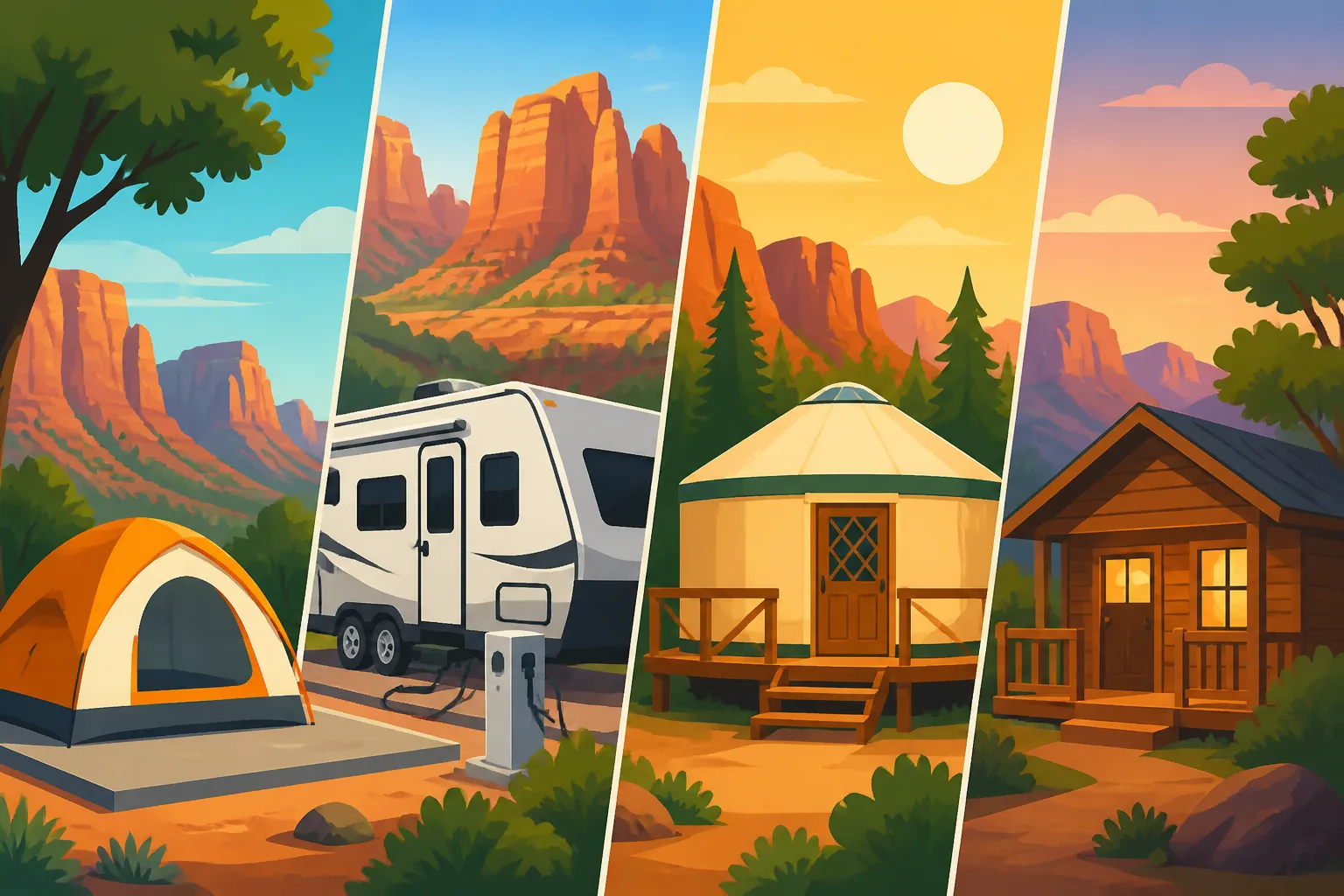
Camping in Utah State Parks can mean anything from a tent on a simple pad to an RV connected to utilities or a night in a yurt or cabin. The tricky part is matching the stay to the site, season, and comfort you want. This guide explains what to compare, what to confirm before booking, and how to plan without assuming every park offers the same setup.
Start with the kind of stay you want
A Utah state park trip is easier to plan when you decide what “camping” means for your group before choosing a destination. A tent site, an RV site, and a roofed rental each come with different practical questions. The right choice depends less on which option sounds most comfortable in the abstract and more on what you need for sleeping, cooking, weather, storage, and daily routines.
According to the Utah Division of State Parks and Recreation, the Utah State Parks system includes 46 heritage, scenic, and recreation parks. That range makes it useful to choose a setting and type of visit first, then compare the available campsites or lodging at parks that fit. A park’s landscape or activities may be the reason for your trip, but the overnight setup can affect how much gear you bring and how you handle changing conditions.
Think through the basics with your group:
- Do you want to sleep in your own tent or vehicle, or would you rather use a roofed rental?
- Do you need electrical service, water, or sewer at the site, or can you manage without hookups?
- How much gear can you comfortably carry from your vehicle to the place you’ll sleep?
- Would nearby campground facilities be enough, or does your group need more convenience at the site?
- Are you planning to spend most of your time at camp, or will you mainly use it as a place to sleep between outings?
There isn’t one best type of campsite for every Utah trip. A tent pad may suit campers who pack lightly and want a simple overnight. A full-hookup site may make more sense for an RV trip where access to utilities is a priority. A yurt or cabin can reduce the need to bring a tent, but the listing still determines what is provided and what you must pack.
It also helps to separate the park decision from the campsite decision. First, choose a location that works for your plans and travel. Then compare the specific accommodations at that park. Mountain Lakes or Red Rock? Choosing a Utah State Park to Camp In can help frame the first choice, while Choosing a Campsite in a Utah State Park: Views, Restrooms, Neighbors is useful when you’re comparing individual sites.
Tent pads and tent camping
Tent camping can be a straightforward way to spend the night at a state park, but “tent site” does not tell you everything you need to know. A site may have a defined pad, a walk-in approach, or a location close to other campground activity. Before you reserve, read the individual listing and map rather than relying on a campground’s general description.
The Utah Division of State Parks and Recreation describes the range as full-hookup RV sites to secluded tent pads. The phrase signals that park camping options can differ substantially; it does not mean every park has every type of site. Check the park’s official information to confirm whether a particular campground has tent sites and what those sites are like.
Match your tent to the pad
A tent that fits your usual backyard setup may not fit the designated area at a campground. Look for the listed pad dimensions, surface, and any site notes, then compare them with the footprint of your tent. Include vestibules or other parts of your setup in your own planning, even if the listing only describes the pad itself. When dimensions aren’t available or aren’t clear, ask the park rather than guessing.
A defined pad can help indicate where the tent belongs, but don’t assume that nearby ground is also available for pitching. Rules and site layouts can differ. Will Your Tent Fit the Pad? Tent Pad Sizes at Utah State Parks offers more detail on checking this before you commit.
Check access and hauling distance
Some tent sites are close to the vehicle; others may require you to carry gear from a parking area. That difference changes what feels manageable, especially with bulky sleeping equipment, food, water, or young children in the group. Read the site description for access details and look at the campground map. If the listing doesn’t make the route clear, contact the park before booking.
A walk-in site isn’t necessarily a poor choice, but it rewards a lighter, more organized packing plan. Consider what you can carry in one trip and what needs to remain easy to reach. For details on the trade-offs, see Walk-In Tent Sites at Utah State Parks, and How Far You Haul Gear.
Plan around weather and exposure
A tent keeps your sleeping area separate from the ground and surrounding campground, but it does not provide the same shelter as a building. Before traveling, check the expected conditions and the park’s current notices. Choose sleeping gear that suits the anticipated temperatures, and keep clothing and bedding protected from moisture and dust.
In Utah’s desert settings, shade and water planning deserve particular attention. In mountain settings, cooler nights and changing weather can make a warmer sleep system important even when the day feels comfortable. The specific conditions vary by place and season, so general packing advice can’t replace a forecast and current park information. Tent Camping at Utah’s Desert State Parks: Shade Shelters and Heat and Packing for Cold Nights at Utah’s Mountain State Parks cover those different planning concerns.
For a tent trip, decide how you’ll keep food, waste, and personal items organized before arrival. Use the storage and disposal practices required by the park, and don’t assume that a tent site has the same facilities as a developed RV site or roofed rental. When the listing is not clear about water access, toilets, or other facilities, confirm the details with the park.
RV sites and hookups
RV sites vary in what services they provide. A full-hookup site is a different proposition from a site without hookups, and the distinction can affect comfort, trip length, and what your rig can support. Don’t choose based only on the word “RV” in a listing. Confirm the actual services and the site specifications before booking.
The Utah Division of State Parks and Recreation says Palisade State Park offers campsites with full hookups and campsites without hookups. That example is a reminder to compare sites within a park, not just one park against another. According to the Utah Division of State Parks and Recreation, Palisade State Park offers campsites with full hookups and sites without hookups.
Understand what a hookup description means for your trip
A site listing should tell you which services are available at the site. Read it closely and distinguish between a hookup at your space and a facility elsewhere in the campground. If the description is vague, ask the park what the specific site includes rather than assuming that a nearby amenity is connected to your site.
Full hookups may be useful for travelers who want the convenience of services at the campsite. But they aren’t automatically necessary for every RV trip. If your rig and travel plans allow you to manage without those connections, a site without hookups may work. Consider what your vehicle can comfortably support and how long you expect to stay, then compare that with the amenities listed.
Useful questions to settle before reserving include:
- Which services are connected at the site, and which are available elsewhere?
- Does the site description match the needs of your RV and its equipment?
- Does the listing provide usable dimensions or other fit details?
- Are any campground facilities seasonal or subject to change?
- What should you do if you arrive and the site does not match the information you reviewed?
The listing is the starting point, but site maps and park updates help put the details in context. Back-In Sites, Restrooms and Power: Reading a Utah State Park Listing explains how to interpret campsite information, while Full, Partial or None: Matching Your Rig to a Utah Hookup Site can help you decide what level of service fits your rig.
Check fit, access, and operating needs
A site with the right hookups can still be a poor fit if your vehicle cannot maneuver into it or the layout doesn’t suit how you camp. Check the posted site dimensions and any notes on access, parking, or vehicle limits. If you tow a trailer, think about the full combination rather than only the living space. Confirm uncertain details with the park before traveling.
Your equipment also matters. Understand what your rig needs to connect safely, and bring the adapters or other equipment appropriate to your setup. Don’t expect a site listing to answer questions about every RV model or electrical requirement. When an important specification is missing, contact the park or consult the equipment maker before you go.
For a stay without hookups, plan for the services you won’t have at the site. Think about power use, water use, and how you’ll manage waste in accordance with the campground’s rules. The practical trade-off is straightforward: a more basic site may require more self-management, while a site with more services can make some routines easier. Neither choice guarantees a better trip; the useful choice is the one your group and rig can handle.
Yurts and cabins
A yurt or cabin can be a good middle ground when you want shelter but don’t want to bring a full tent setup. Availability and facilities depend on the specific accommodation, so treat the listing as the source of truth. A roofed place to sleep does not necessarily include the bedding, kitchen equipment, bathroom facilities, or other conveniences you might associate with a cabin at a different destination.
Utah State Parks offers canvas yurts, according to the Utah Division of State Parks and Recreation. If you’re considering a yurt or cabin, check the individual listing for what is inside, what is outside, and what you need to bring. Don’t infer amenities from the building type or from another park’s rental.
Read the accommodation details carefully
Before booking, look for the sleeping arrangement, the available furnishings, and the location of restrooms or other shared facilities. Confirm whether linens, cooking equipment, or other items are supplied instead of assuming they are. If the description leaves a practical question unanswered, ask the park before your trip.
It’s helpful to think of the rental as a specific package of features, not just a label. A yurt and a cabin can differ in construction and equipment, but those broad labels alone don’t tell you what a particular unit includes. Compare the actual listing with your group’s needs, especially if someone relies on a particular sleeping setup or facility.
For a closer look at the distinction, see Is a Yurt Just a Canvas Cabin? Comparing Utah State Park Lodging. If you’re choosing between roofed options, Yurt Rentals at Utah State Parks: Heat, Bunks and Who Can Stay and Cabins With a Bathroom Inside or Restrooms Nearby at Utah State Parks highlight questions to investigate rather than assumptions to make.
Plan for what the rental does not provide
A roof can simplify some parts of camping, but it doesn’t eliminate the need to pack. Bring the items the listing says are not provided, and prepare for outdoor time around the unit. You may still need personal bedding, food and cooking supplies, weather-appropriate clothing, and lighting or charging arrangements suited to the accommodation.
Check whether the rental has utilities, climate control, or a cooking area before planning meals and packing equipment. Don’t assume that an amenity at one park appears at another. Likewise, confirm any restrictions that affect your party, such as rules for pets or the number and type of occupants. Those details are specific to the accommodation and should be checked in the official listing.
A yurt or cabin can make a trip easier for someone who would rather not sleep in a tent, but it may not offer the same flexibility as bringing your own setup. Consider location, privacy, nearby facilities, and how much time you expect to spend indoors. If the unit is mainly a place to sleep, a simpler rental may meet your needs. If you plan to spend more time at the accommodation, its facilities and layout may matter much more.
Choosing a park, site, and season
Once you know what kind of accommodation you want, compare parks by the setting and the practical details of the stay. A scenic location may be a strong match for your plans, but the campground’s facilities, travel access, and seasonal availability still matter. Use the park’s official information to confirm that the specific site type you want is offered for the dates you’re considering.
Choose by trip priorities
Start with what your group hopes to do during the day. If the destination is important for a particular landscape or activity, narrow the park options around that priority. Then review the overnight options. This order helps prevent a common planning mismatch: choosing a campground because it has a feature you like, only to find that the site layout or lodging doesn’t suit your group.
Think about the people traveling with you, too. A family carrying a lot of gear may prefer an easy route to the site. Someone who values a simple, low-equipment stay may prefer a roofed rental. An RV traveler may prioritize a compatible site and the utilities their rig needs. Family Tent Camping at a Utah State Park: Picking the Park and Site and Which Utah State Park Fits a First Camping Trip? can help organize those decisions.
Check season and operating status
Campgrounds and facilities may operate differently as conditions change. A site being listed online does not by itself answer every question about access, water, road conditions, or nearby facilities during your travel dates. Review current official park information before leaving and check for updates again when you arrive.
For a mountain trip, look at seasonal openings and likely weather before planning around a particular campground. For a desert trip, prepare for heat and changing conditions even if the campsite itself is available. Winter Closures, Spring Crowds, Summer Heat: A Utah State Parks Year provides a seasonal overview, and When Do Utah’s Mountain State Parks Open for Summer Camping? is relevant when your plans depend on a high-elevation campground.
Be flexible where you can. If your first-choice site is unavailable or conditions change, consider another campground or accommodation that still fits your basic needs. A backup plan is especially useful when your trip depends on a single type of site, a narrow travel window, or a specific facility. Check that alternative directly rather than assuming it offers the same setup.
Reservations, passes, and trip costs
Before committing, make sure you understand what the booking covers and which costs or requirements are separate. A campsite reservation, a park admission pass, and optional services may be different parts of the trip. Read the official information for both the campground and the park so that you know what you’ve arranged and what still needs attention.
According to the Utah Division of State Parks and Recreation, pass options include an annual pass , campsite or day-use pass. Check the official information for the current details and conditions of the pass that applies to your visit. Don’t assume that a pass for park entry also pays for a campsite, lodging, or a separate activity.
When estimating the overall cost, consider the pieces separately:
- Park entry or pass requirements
- The campsite or lodging charge
- Any separately listed services or activities
- Travel costs and supplies you need to bring
- Equipment you may need to rent or obtain
The exact charges and what they cover can vary by park, site, and accommodation. Confirm the current figures with the official source before you make plans. Entry Fee, Campsite Fee or Both? How Utah State Parks Charge explains why it is useful to treat entry and overnight costs as separate questions. For pass details, see Utah’s Annual Day-Use Pass: What It Covers and What It Doesn’t and How Utah’s Digital Day-Use Pass Works, and What It Won’t Do.
Understand the booking before you pay
Review the reservation details for the correct park, campground, site, and dates. Check the cancellation and change terms, arrival instructions, and any limits or requirements shown for that booking. These are details that can affect your plans if the trip changes, so read them before finalizing rather than waiting until you need to make an adjustment.
If you are comparing several options, look beyond the headline price. One site may include services that another does not. A roofed rental may reduce some equipment needs but have its own limitations. The best comparison is between the total costs and practical trade-offs for the options you would genuinely use.
For more on how to approach a reservation, Utah State Park Campground Reservations: How Reserve America Works and Reading Campsite Details Online Before Booking in Utah are useful next steps. Always follow the booking instructions shown by the official park information or reservation system.
A practical planning checklist
A short check before departure can prevent avoidable surprises. Focus on the details that are specific to your site and the needs of your group rather than relying on a generic packing list. Save the official campsite or lodging description, review the map, and note how to check current park information while traveling.
Before you reserve
- Choose the accommodation type that suits your group: tent pad, RV site, yurt, or cabin.
- Compare the specific listing with the dimensions and equipment you plan to bring.
- Confirm what utilities and facilities are at the site versus elsewhere in the campground.
- For tent sites, check pad dimensions, surface, and the distance or route from parking.
- For RV sites, confirm hookups, access, and fit details that matter to your rig.
- For roofed rentals, confirm sleeping arrangements, furnishings, and what you must supply.
- Review the current booking terms and what the reservation includes.
- Check whether the park has updates that affect access or facilities for your dates.
Before you leave
- Check the forecast and pack for the conditions expected at the destination.
- Bring the supplies the official listing says are not provided.
- Have a plan for food, water, waste, and power that matches your campsite.
- Make sure every traveler knows the accommodation type and its limitations.
- Keep the park’s official information available so you can check for changes.
- Leave room in the plan for a backup if weather, access, or availability shifts.
When you arrive
Compare what you see with the listing and follow posted instructions. If a site or facility differs from what you understood, contact park staff using the current contact details on the official website. Don’t move into another site or assume that a different space is available without permission. If you need to adjust your plans, ask the park about the appropriate options.
At camp, follow the rules for the specific location. Details such as fire use, pets, quiet hours, and facility access can depend on the park or campground. Don’t use the presence of a fire ring or an amenity at a neighboring site as proof that it is allowed or available to you. Check the park’s current information, and review Utah State Park Campground Rules Every Camper Should Know before setting up.
The most reliable approach is to make your choice from the exact campsite or lodging listing, then verify the details close to departure. That lets you compare tent pads, RV hookups, yurts, and cabins on the features that affect your trip rather than on assumptions about what a particular label includes.
Frequently Asked Questions
Do all Utah State Parks have tent pads, hookups, yurts, and cabins?
No single accommodation type should be assumed to be available at every park. Check the specific park and campground listing to see what is offered for your travel dates.
What should I check before booking an RV site?
Confirm the services listed for the specific site, along with its dimensions and access details. If a key detail about fit or hookups is missing, contact the park before booking.
Are supplies included in a yurt or cabin?
What is provided depends on the individual accommodation. Read its official description and confirm any unclear details, especially for bedding, cooking, utilities, and nearby facilities.
Does a campsite reservation include park entry?
A campsite reservation and park entry may be separate. Check the official park and pass information to understand what your booking covers and what else may be required.
Sources
- Utah Division of State Parks and Recreation — Adventure on Land | Utah State Parks (checked November 22, 2026)
- Utah Division of State Parks and Recreation — About Us | Utah State Parks (checked November 22, 2026)
- Utah Division of State Parks and Recreation — Camping and Lodging | Utah State Parks (checked November 23, 2026)
Disclaimer
This article is for general informational purposes only and does not constitute professional advice. Laws, prices and regulations vary by location and change over time. Consult a qualified professional for guidance on your specific situation. Utah Camping & RV is not a government agency and is not affiliated with any government agency.